From Tortle Ninja to AutoLayer: the rebrand and V1 numbers
Why Tortle Ninja became AutoLayer, who is behind it, and what the team reported about V1 activity in its February-March 2024 Arbitrum grant application.
AutoLayer Research · Published Oct 15, 2026 · 6 min read
Source note. This article is built from one document: AutoLayer’s own application to the Arbitrum Long-Term Incentives Pilot Program (LTIPP), posted on the Arbitrum forum and dated 26 February 2024. The text of that post mentions events up to 12 March 2024, so it was evidently edited after it first appeared. Every figure below is the team’s self-reported number as of February-March 2024. Nothing here is a current metric, and we have not independently audited any of it.
What changed: a name and a focus
AutoLayer is the new name of Tortle Ninja. In the application, the team describes AutoLayer as “formerly known as Tortle Ninja” and as a rebranding rather than a new protocol. The product it is built on was deployed on Arbitrum in August 2023.
The change of name came with a change of subject. Tortle Ninja, as the post describes it, offered access to a wide set of assets, liquidity pools, farms and vault strategies. AutoLayer keeps that plumbing but points it at one theme: liquid restaking tokens (LRTs), liquid staking tokens (LSTs), the services that restaked assets secure, and the operators that run them. If those terms are new, start with how it works.
The post gives these numbers for the earlier, broader product:
| Item | Reported count |
|---|---|
| Assets reachable | around 800 |
| Liquidity pools | around 400 |
| Farms | around 50 |
| Vaults and strategies | over 100 |
These are the team’s own counts for the Tortle Ninja era. The product page describes what AutoLayer offers today.
Who is behind it
The application describes AutoLayer as a spin-out of Glue Digital, a software company that Javier Blanco Thomas founded in 2010. According to the post, Glue Digital has worked on security, cryptography, e-commerce and mobile projects, and it names design awards and large corporate clients among its credentials. We repeat those claims as the post states them and have not verified them.
The named leadership in the post is:
- Javier B. Thomas, CEO, who is also the applicant of record.
- Anxo Soto, CTO.
- Diana Diaz Reinoso, CDO.
- Katrina Reyes Abad, CMO.
The post puts the team at 14 people: 6 developers, 2 in strategy and operations, and 6 in marketing and design. It also states that the team accepts a KYC requirement and agrees to exclude team-controlled wallets from any incentive metrics. Those last two points are conditions of the grant programme, not marketing claims, and they are worth noting because they show what the programme asked of applicants.
V1 activity before and after the rebrand
The application is candid that AutoLayer had only just launched when it was written. In the post’s words, the protocol had been live for a few days, so metrics were limited. It gave two sets of figures: what Tortle Ninja had done, and what the rebrand had produced so far.
Tortle Ninja era (reported):
- About 11,000 transactions between October and January.
- Over 40,000 “embedded transactions”. The post does not define this term further.
- About 13,500 website visitors since launch as Tortle Ninja.
Right after the rebrand (reported):
- A daily trading volume of roughly $20,000 since launch.
- A rebrand announcement on Twitter that the post says drew over 8,600 impressions, and daily posts averaging over 1,000 impressions.
The two charts below are Dune Analytics visuals the team embedded in the post. The first is a counter showing 10,897 total transactions. The second plots transactions per day from mid-January to mid-February 2024.
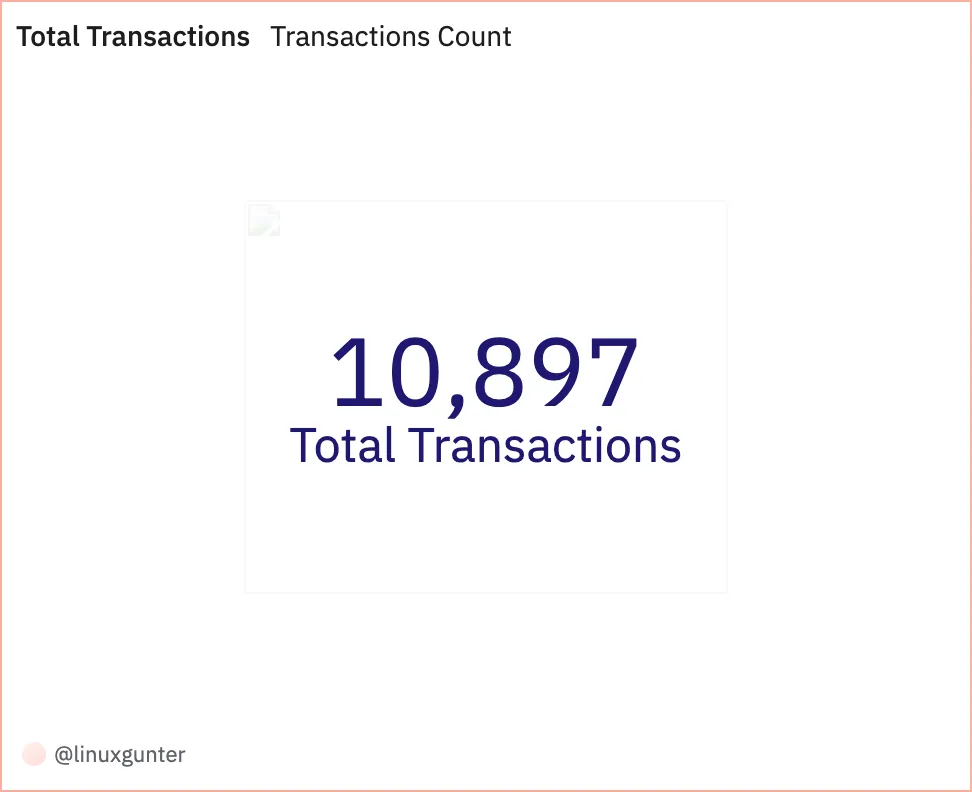
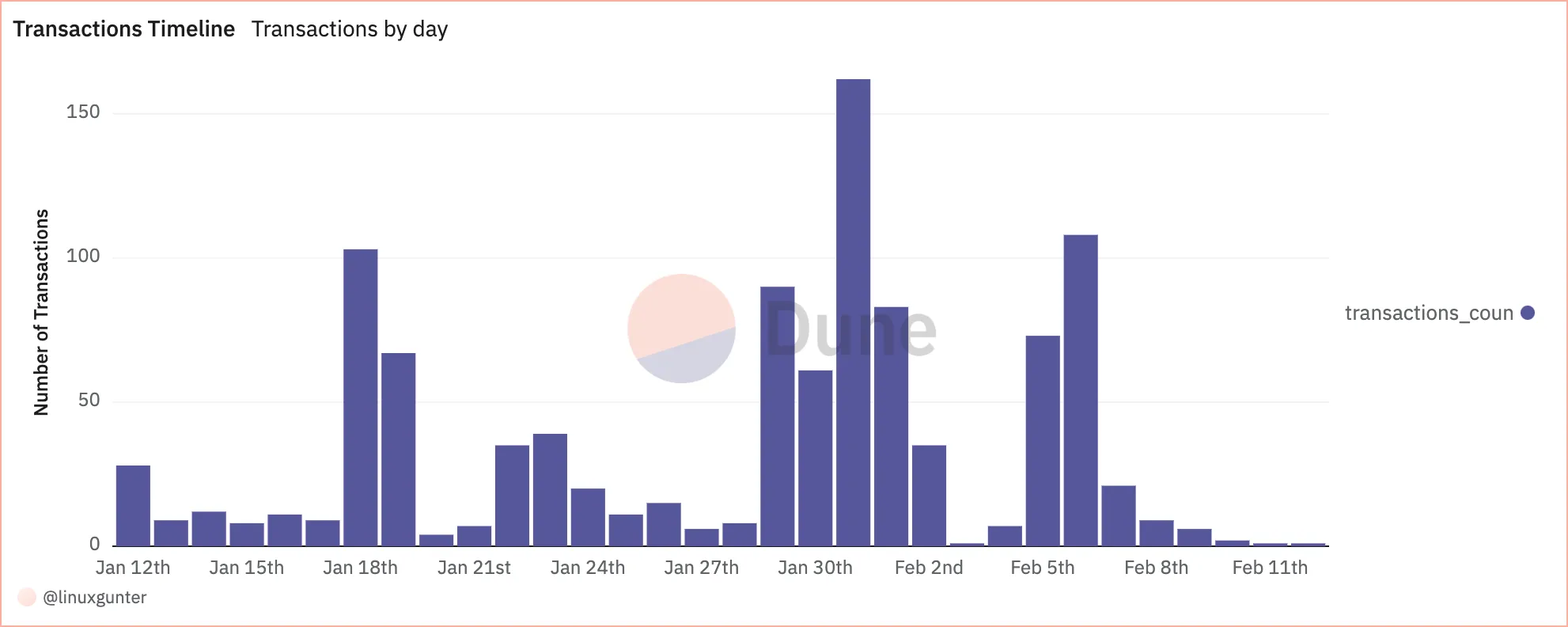
How to read them: the numbers are small, and they are transaction counts, not value locked. The daily chart is uneven, with a handful of busy days and several near-empty ones. That is typical of an early product and is not a sign of either strength or weakness. Treat it as a snapshot of where V1 stood, not a trend line.
What the team said it was not tracking
One line in the application deserves attention. The team says that “at present” it does not track total value locked (TVL). Its primary metric is transaction volume, because AutoLayer routes funds through other protocols instead of holding them itself. For a reader comparing AutoLayer with vault or lending protocols, that matters: TVL is the usual yardstick elsewhere, and this project deliberately reported something else. The intent-based routing guide explains why that design leads to a volume metric.
Security and audit history, as reported
The post makes three statements on security:
- The earlier product, as Tortle Ninja, was audited by PeckShield, and the post links the report.
- New AutoLayer contracts were deployed in March 2024 (the post gives 1 March and 12 March for different contract versions) and were still being audited, with at least two audits scheduled “in the coming months”.
- No security incidents had occurred to date.
An audit of one contract set does not cover a later one, and the post itself says the new contracts were not yet audited when it was written. Read the security page for the current position and the risk disclosure before relying on any of this.
What was planned, not shipped
The application also set out a V2 roadmap and a native token plan. As of February 2024 these were plans:
- Native token. Launch “scheduled” for around 25 April 2024.
- V2 features. AVS scoring, LRT scoring, compounding and liquification, and slashing bounties.
- Incentives. A request of 100,000 ARB from the LTIPP, to be paired with the project’s own token if the token launched on schedule. The LTIPP council did not recommend the application: its screening results list AutoLayer at 1 of 4 votes in favour.
Each of the V2 features has its own article: AVS scoring, LRT rehypothecation risk, compounding and liquifying rewards and slashing bounties and Virtual Operators. None of them should be read as a statement that the feature is live today.
Why the rebrand matters for readers
A rename in crypto can mean a fresh start or an attempt to leave a record behind. The application points the other way: it links the old audit, reports the old transaction history under the old name, and states that this is the same team and product. That is a reasonable way to handle a rebrand, but it also means the Tortle Ninja history belongs to AutoLayer’s track record, including the limits of what that history shows.
For anyone evaluating the project, the practical checklist from this document is short:
- Treat all figures as self-reported snapshots from February-March 2024.
- Note that the new contracts were unaudited at the time of writing, by the team’s own account.
- Separate shipped V1 features from V2 plans.
- Remember that nothing here is financial advice.